
When it comes to restoring a youthful face, today’s patients face a wealth of terms: “SMAS lift”, “deep plane facelift”, “plication”. Although they share the same goal, these techniques differ fundamentally in how they are performed, in recovery and in the final result.
In this article we look at two gold-standard techniques so that you can prepare better for your consultation with a surgeon.
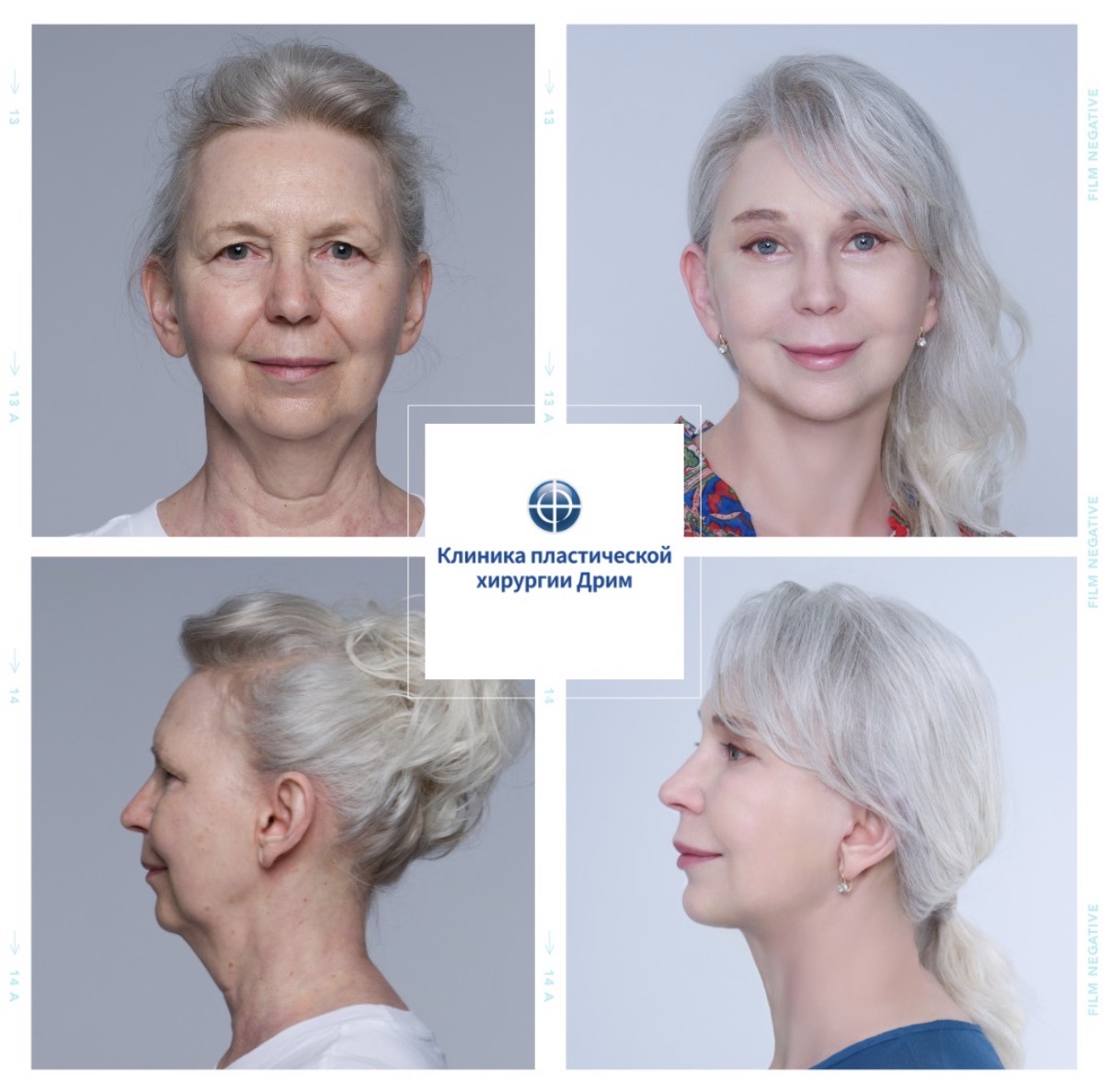
1. SMAS plication: a gentle correction
This technique is considered classic and less invasive. The surgeon works with the superficial musculoaponeurotic system (SMAS) without separating it from the deeper structures.
- How it works: excess SMAS tissue is not cut away but carefully gathered into folds (plication) and stitched to fixed areas.
- Who it suits: patients aged 35–45 with early signs of ptosis (sagging).
- Face type: ideal for a slim face (lean faces with little soft tissue), where heavy fat pads do not need to be repositioned.
Main advantages:
- Fast recovery: less work in the deep layers means less swelling and bruising.
- Safety: minimal risk to the facial nerves.
- Affordability: the operation takes less time, which lowers operating room and anaesthesia costs.
2. Deep Plane facelift: architectural rejuvenation
This is the “top level” of plastic surgery. The technique involves working beneath the SMAS layer, in the deep spaces of the face.
- How it works: the surgeon releases the key retaining ligaments that hold the tissues in their sagging position. Only then is the muscle layer moved, freely and without tension, back to where it was 10–15 years ago.
- Who it suits: patients aged 45–60+ or with pronounced age-related changes.
- Face type: the best choice for thick skin and heavy tissue, when pronounced jowls need to be removed and the midface “lifted”.
Main advantages:
- Natural look: the face does not look “overpulled”. The effect comes from repositioning volume rather than stretching the skin.
- Longevity: the result lasts 10–15 years, because the tissues are fixed without internal resistance from the ligaments.
- Comprehensive effect: the technique effectively addresses deep nasolabial folds and malar bags.
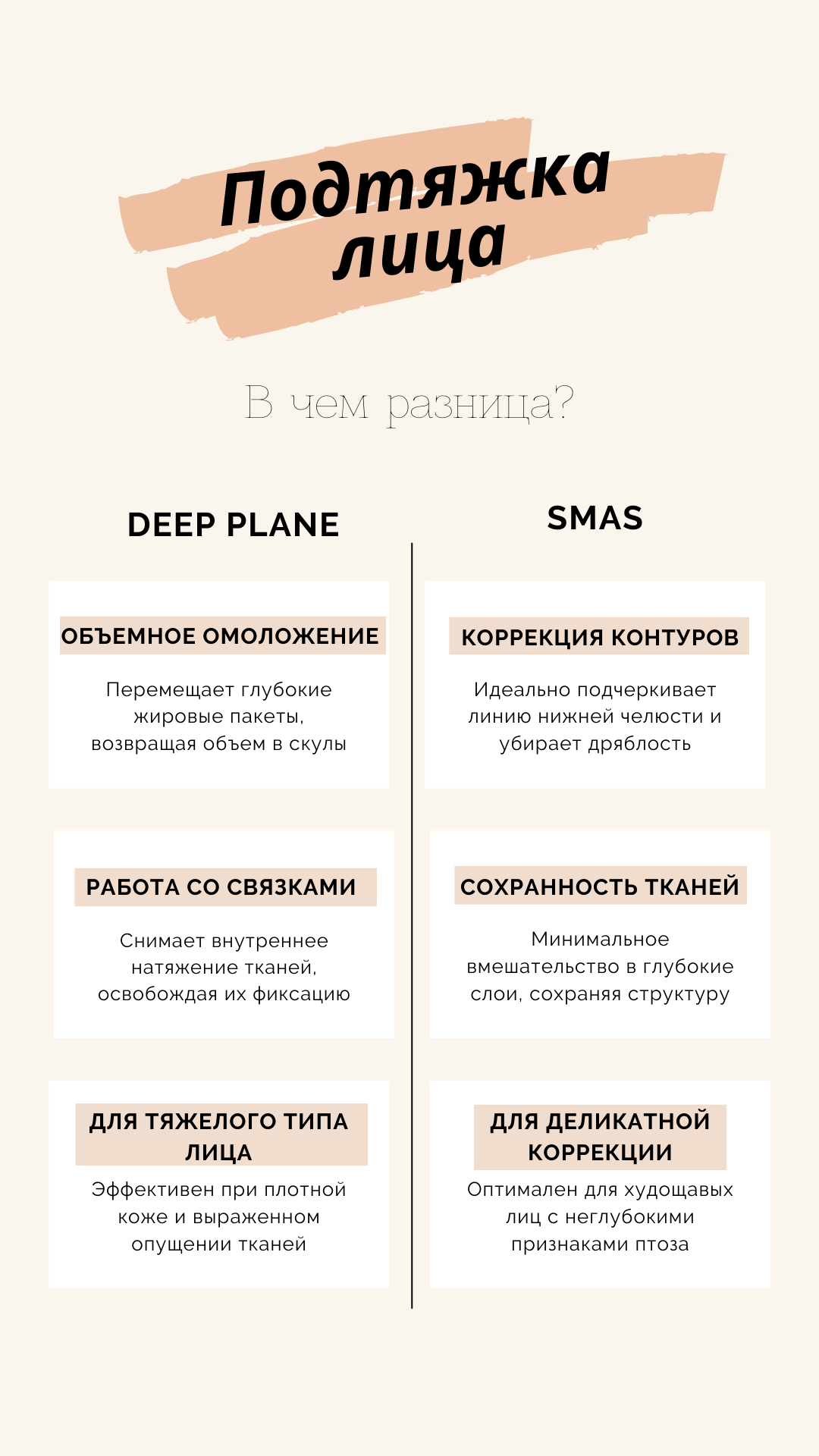
So which one should you choose?
If your goal is a quick correction of the first signs of ageing with minimal recovery time, plication is an excellent solution.
If you are looking for the longest-lasting and most dramatic result and your face tends towards a “heavy” type of ageing, the Deep Plane technique is the one to trust.
Important: a deep plane facelift requires the surgeon to have an exceptional knowledge of anatomy and many years of experience specifically in the maxillofacial area.
Want to know which technique suits your face type? Book a consultation and together we will choose the best plan for your transformation.
Arranging surgery in another country is not only about choosing a doctor: there are dozens of documents, visas and logistics, and we take care of all of it. We provide comfortable transfers, professional interpreting and support at every step, ensuring your safety and peace of mind.
Take the first step towards your goal without stress — contact us and we will prepare your travel plan!
Email: patients@wowvos.co.kr
Tel: +82 10 8236 0771
